
Seasonal Meal Plans: How to Eat Smarter, Waste Less, and Save Money Year-Round
- Rochelle Asilo

- May 13
- 5 min read
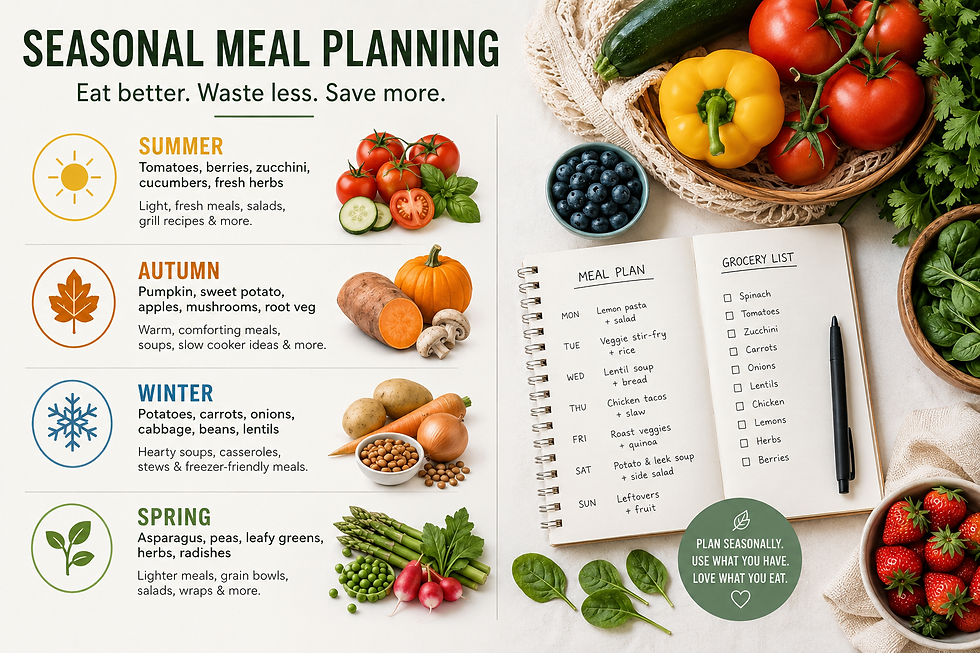
Seasonal meal planning is one of the easiest ways to save money on groceries, reduce food waste, and make cooking feel less stressful.
Instead of buying random ingredients every week and wondering what to cook, seasonal meal plans help you work with foods that are naturally fresher, cheaper, and easier to use during different times of the year.
Whether it’s hearty soups in winter, fresh salads in summer, or slow-cooker meals in autumn, eating seasonally helps simplify your kitchen routine while making the most of the ingredients already in your pantry.
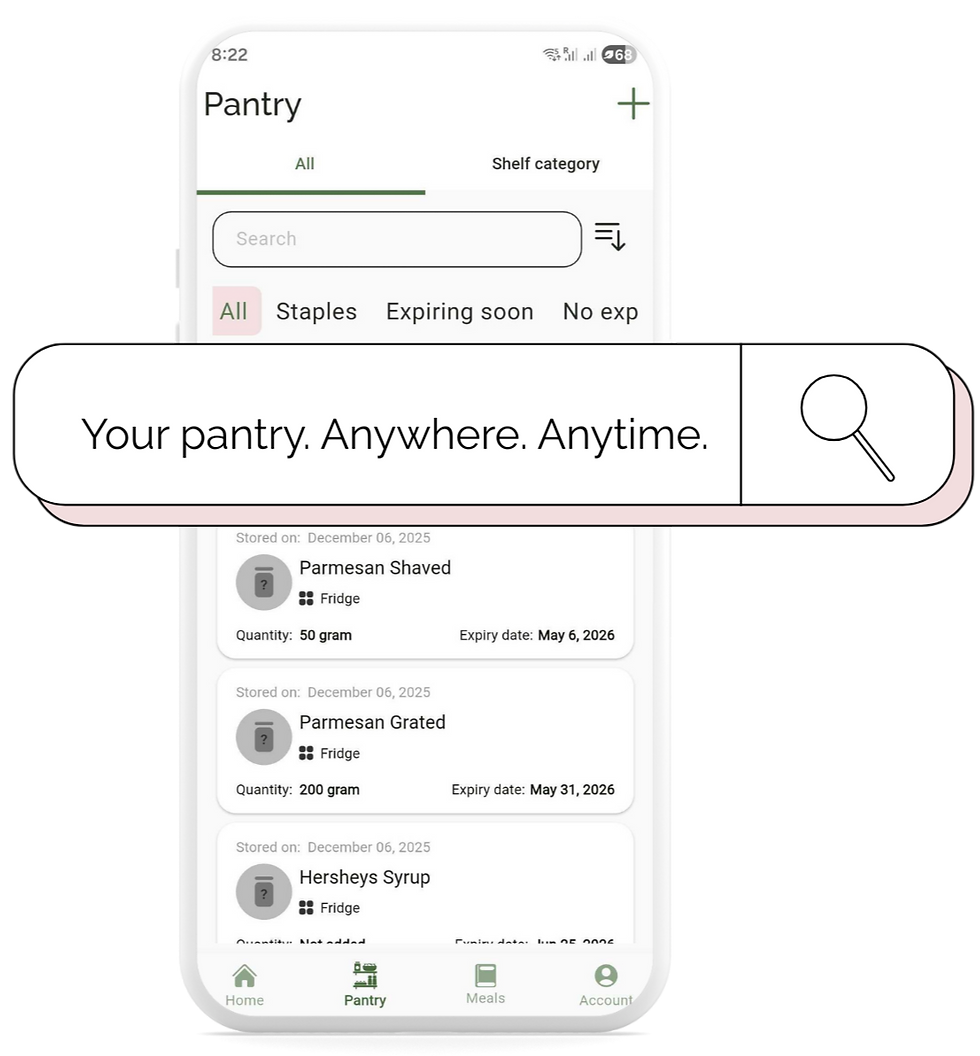
And when paired with a pantry management system like Shelve, seasonal meal planning becomes even easier.
What Is Seasonal Meal Planning?
Seasonal meal planning means building your weekly meals around ingredients that are currently in season.
For example:
Summer meals often include tomatoes, berries, cucumbers, and fresh herbs
Autumn meals focus on pumpkins, root vegetables, and slow-cooked dishes
Winter meals rely on pantry staples, soups, casseroles, and freezer-friendly recipes
Spring meals bring lighter dishes with greens, peas, and fresh produce
Because seasonal ingredients are usually more available, they tend to cost less and taste better.
Seasonal planning also naturally encourages variety, helping you avoid the “same meals every week” fatigue cycle.
Why Seasonal Meal Plans Work So Well
Seasonal Ingredients Are Usually Cheaper
When produce is in season, supply is higher — which usually means lower prices at the supermarket. Planning meals around seasonal foods helps reduce grocery costs without feeling restrictive.
This works especially well when combined with:
pantry inventory tracking
smarter grocery shopping
meal planning from ingredients you already own
Shelve’s approach focuses on helping households connect their pantry, recipes, and grocery lists in one workflow. (Shelve App)
You Reduce Food Waste
One of the biggest causes of food waste is buying ingredients without a clear plan to use them. Seasonal meal planning helps because:
ingredients overlap across meals
produce gets used faster
you buy with intention instead of impulse
For example:
a bag of spinach can be used in salads, pasta, omelettes, and smoothies during the same week
roast vegetables can become soups, grain bowls, or wraps later in the week
This reduces forgotten ingredients and unnecessary grocery runs.
If food waste is already a challenge in your kitchen, Shelve’s guide on pantry organisation offers practical ways to make ingredients more visible and usable:👉 Pantry Organisation Tips to Save Money & Reduce Waste
How to Build a Seasonal Meal Plan
Seasonal meal planning doesn’t need to be complicated. Here’s a simple framework that works for most households.
Step 1: Check What You Already Have
Before deciding what to cook, look at:
pantry staples
freezer ingredients
vegetables that need using soon
leftovers
ingredients close to expiry
This prevents duplicate purchases and helps you build meals around food you already own.
Step 2: Choose Seasonal Produce
Next, pick a few seasonal ingredients that can work across multiple meals.
Examples:
Summer
tomatoes
zucchini
cucumber
berries
basil
Autumn
pumpkin
sweet potato
mushrooms
apples
Winter
potatoes
carrots
onions
frozen vegetables
beans and lentils
Spring
asparagus
peas
leafy greens
herbs
The goal is flexibility — not perfection.
Step 3: Plan Flexible Meals
The easiest seasonal meal plans rely on adaptable meal formats.
Examples:
stir-fries
soups
grain bowls
pasta dishes
tacos
sheet pan dinners
curries
These meals help you use whatever ingredients you already have at home. This is also where recipe organisation becomes incredibly helpful.
Instead of searching endlessly for ideas, Shelve helps users organise recipes and identify meals they can cook with existing pantry ingredients. (Shelve App)
Seasonal Meal Plan Ideas by Season
Summer Meal Plan Ideas
Summer meals should feel lighter, faster, and fresher.
Ideas:
grilled chicken wraps
pasta salad with vegetables
rice bowls with fresh herbs
smoothies with frozen fruit
quick tacos
cold noodle salads
Summer is also a great time to reduce oven use and rely more on simple meals with minimal prep.
Autumn Meal Plan Ideas
Autumn meals are ideal for batch cooking and comfort foods.
Ideas:
pumpkin soup
slow cooker chilli
roasted vegetable pasta
baked potato dishes
shepherd’s pie
curry with seasonal vegetables
Autumn is also one of the best seasons for freezer meal prep.
Winter Meal Plan Ideas
Winter meal planning works best when focused on:
pantry staples
freezer-friendly meals
low-cost ingredients
bulk cooking
Ideas:
lentil soup
casseroles
hearty pasta bakes
stews
fried rice
bean chilli
Winter is often when food waste increases because ingredients get forgotten in crowded pantries and freezers. So keeping a visible pantry inventory can make a major difference here.
Spring Meal Plan Ideas
Spring meals are often lighter but still practical.
Ideas:
lemon pasta
fresh herb rice bowls
vegetable frittatas
salads with grains
light soups
wraps and sandwiches
Spring is also a good time for a pantry reset and reorganising ingredients before summer.
Tips to Make Seasonal Meal Planning Easier
Keep a “Use First” Section
A dedicated space for near-expiry ingredients, opened products, or leftovers helps reduce waste significantly.
This is one of the easiest pantry organisation habits to maintain long term. (Shelve App)
Reuse Ingredients Across Multiple Meals
Instead of buying ingredients for one recipe only, plan overlap intentionally.
For example:
roast vegetables → grain bowls → soup
cooked chicken → wraps → pasta → fried rice
herbs → salads → sauces → soups
This lowers grocery costs while simplifying cooking.
Keep a Core List of Go-To Meals
A good seasonal meal plan doesn’t require new recipes every week. Keep:
10–15 reliable meals
pantry staples always stocked
repeatable grocery categories
This reduces decision fatigue and makes weekly planning faster.
Why Pantry-Based Meal Planning Matters
The biggest shift most households can make is this:
Instead of asking:
What should we buy?
Ask:
What can we make with what we already have?
That small mindset change can:
reduce grocery overspending
lower food waste
simplify weekly cooking
reduce duplicate purchases
make meal planning feel manageable
Final Thoughts
Seasonal meal planning isn’t about eating perfectly or cooking elaborate meals every night of the current season. It’s about:
using ingredients more efficiently
reducing waste
simplifying grocery shopping
lowering food costs
making everyday cooking easier
When you combine seasonal ingredients with pantry awareness and organised recipes, meal planning becomes far less stressful.
And instead of wasting groceries, you start getting more value out of the food you already have at home.
Want to make seasonal meal planning easier? Explore how Shelve helps households track pantry items, organise recipes, and build smarter grocery lists from what they already own:👉 Why Shelve?
Frequently Asked Questions
What is seasonal meal planning?
Seasonal meal planning means building meals around ingredients that are naturally in season, easier to find, and often more affordable.
Does eating seasonally save money?
It can. Seasonal produce is often more available, which can make it cheaper than out-of-season ingredients.
How do I make a seasonal meal plan?
Start by checking what you already have, choosing a few seasonal ingredients, and planning flexible meals such as soups, stir-fries, salads, curries, or pasta dishes.
How does seasonal meal planning reduce food waste?
It encourages you to buy ingredients with a plan, reuse ingredients across meals, and avoid random groceries that may go unused.


Comments